

Teatro anatomico
The anatomical theatre of Padua is the oldest permanent anatomical theatre in the world, commissioned by Girolamo Fabrici d'Acquapendente in 1594 and still perfectly preserved.
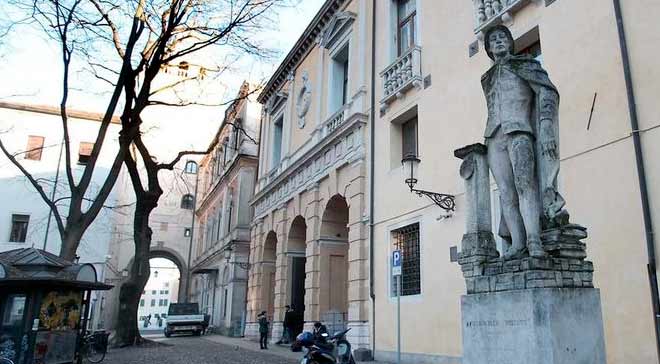
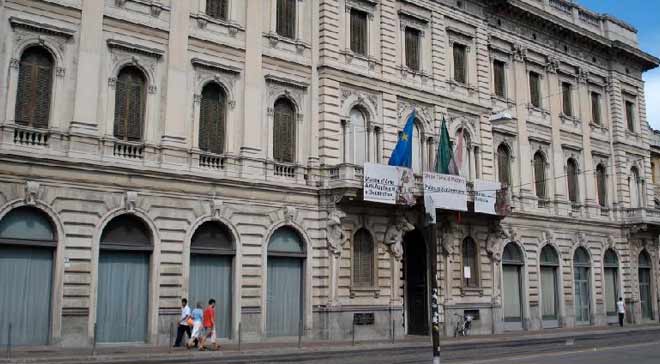
It can be visited at the Palazzo del Bo of the University of Padua.
It is the oldest permanent structure for the study of anatomy.
The dissection table is surrounded by six tiers of galleries in carved walnut.
At the entrance to the anatomical theatre one can see the Latin inscription “Mors ubi gaudet succurrere vitae”, meaning “Where death is glad to come to the aid of life”.
Built according to the stylistic canons of the Renaissance, the theatre, in the shape of an inverted cone, has an elliptical plan and is arranged in six parallel tiers, each fitted with a wooden railing 1.07 m high. The diameter of the uppermost tier is 7.56 m at its widest point and 6.92 m at its narrowest, while the diameter of the lowest tier is 3.49 m and 2.97 m respectively. This last tier stands 1.84 m above the ground. The space available to the public on each tier, between the balustrade and the base of the next tier, is 40 cm.
Until 1844 the theatre was artificially lit, since the windows of the room in which it was located were kept closed. Light was provided by two candlesticks placed at the ends of the anatomical table and by eight candles held by an equal number of students seated on movable stools. Initially the bench on which the corpse was placed and where the lesson took place stood at the level of the room’s floor. The present wooden floor, which stands about two metres above the ground, was installed in 1845 by the then professor of anatomy Cortese, who also had the carved walnut railings painted white—they had previously been polished—and had the windows opened to light the theatre with daylight.
Over the years the theatre has undergone no alteration whatsoever.