

Piazza delle Erbe
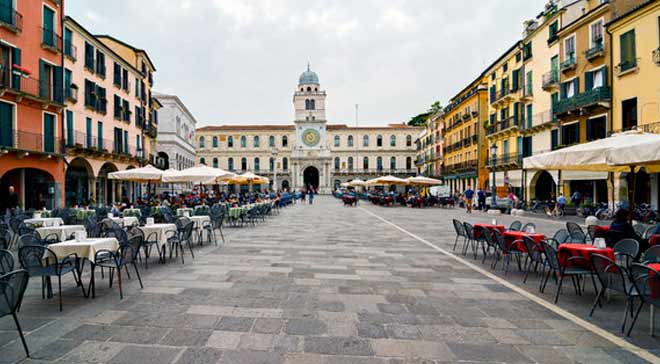
Piazza delle Erbe, once also called Piazza delle Biade or Piazza del Vino but also Piazza della Giustizia, is one of the many squares that characterise the historic centre of Padua.
For centuries it was, together with Piazza della Frutta, the commercial heart of the city. The two squares host one of the largest markets in Italy.
Unlike Piazza dei Signori, the setting for civic celebrations, Piazza delle Erbe was the venue for popular festivities.
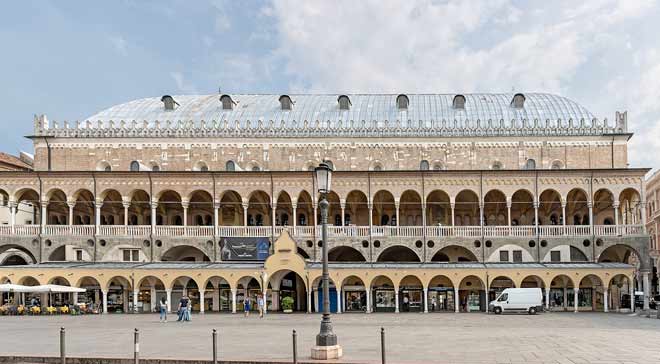
The square is dominated by the great bulk of the Palazzo della Ragione, part of the great Palazzo Comunale.
The area was lively in pre-Roman times, as the numerous archaeological finds bear witness.
According to some, it was already a place of trade in imperial times, but it owes its present form to the 10th and 11th centuries.
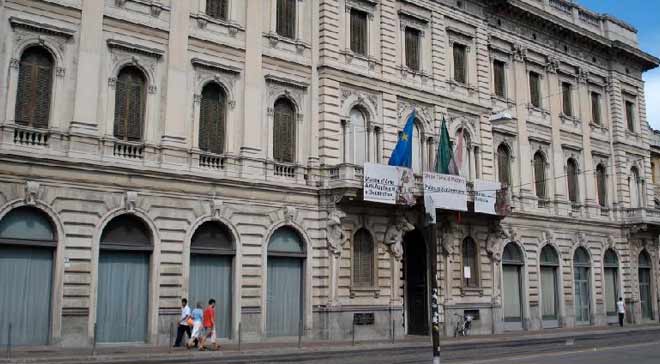
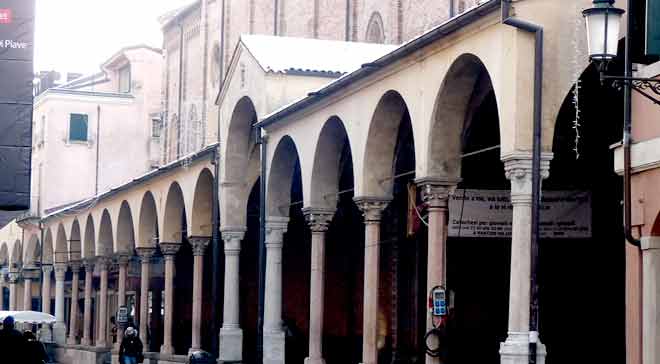
The space came to be occupied by numerous shops and stalls selling all kinds of goods, from foodstuffs to luxury items. It was with the construction of the Palazzo della Ragione at the beginning of the 13th century that an attempt was made to arrange the various points of sale: beneath the hall settled the sellers of fabrics and furs, while at the foot of the palazzo's great staircases facing the square stood the awnings of the sellers of wrought iron (the Scala dei Feri, to the east) and of wine (the Scala del Vin, to the west), while in the open space stood the movable stalls of the sellers of grain and leather. Beneath the Palazzo del Podestà opened the shops of the oresi (goldsmiths). In 1302 an attempt was made to enlarge the space by demolishing the jacket-makers' warehouse - located where the fountain now stands - shaping the square as it is seen today, with the distinctive prominent position of the Palazzo del Podestà. Giovanni da Nono, in his Visio Egidii, recorded with great precision the enlargement of the Palazzo della Ragione in 1309 and the arrangement of the shops at that time. In the 18th century the medieval houses to the south were rearranged, with the realignment of the porticoes. In 1874, on the site of the prisons to the west, the Palazzo delle Debite was built, while at the beginning of the 20th century the Moschini wing was completed on the site of the 14th-century Fondaco delle Biade.
In the square, beneath the Palazzo del Podestà, there was an ancient well. In August 1785 it was adorned with the well-head from the well that stood in Piazza dei Signori, which was closed and levelled that month for the decorum of the square. During the 19th century the well was the object of sharp criticism, above all concerning the hygienic neglect in the use of buckets to draw the water. It was definitively levelled and covered by a manhole - visible on the paving - in 1930, when the present monumental fountain was built.
The square, paved in the Middle Ages, was flagged in several stages during the 18th century and radically in 1867.
On the day of San Giacomo each year the square sumptuously hosted the arrival of the Palio race, the "Ludi Carraresi" established by the citizenry in 1382 to celebrate the Carraresi seigniory and commemorate the rise to power of Giacomo I da Carrara, which took place on 28 June 1318, the day of the feast of San Giacomo. The rider who first reached the square - having set off at a gallop from Voltabarozzo - would win the palio, a piece of precious silk cloth, while the second won a young goose, the third an owl.
Until 1864, the numbers of the Lotto game were drawn on the loggia of the Palazzo della Ragione and proclaimed there to the crowd packed into the square.