

Porta Molino
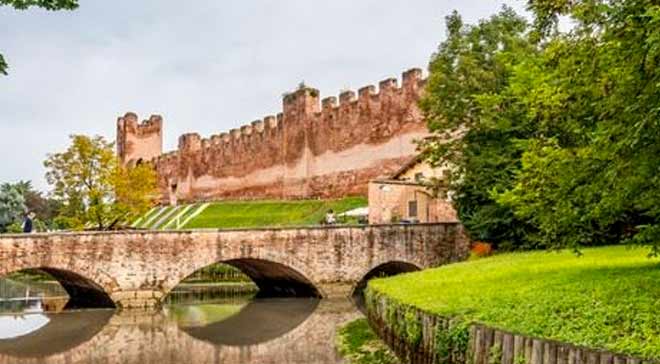
Porta Molino or Porta dei Molini was the principal of the four regales gates that opened in the medieval city walls of Padua.
Facing north, it rises at the end of the Roman Ponte Molino which crosses the branch of the Bacchiglione called Tronco Maestro, where until 1884 thirty-three wheels of as many mills mounted on boats were in operation, from which the gate and the bridge take their name.
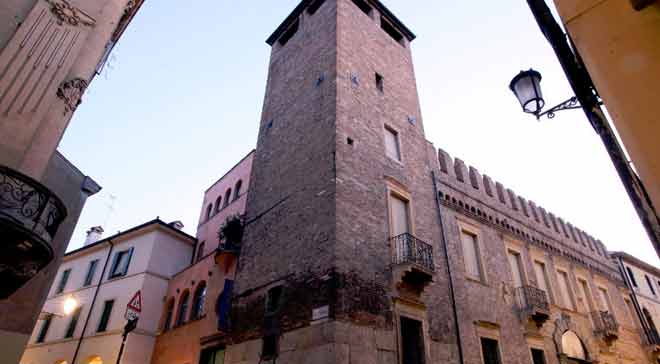
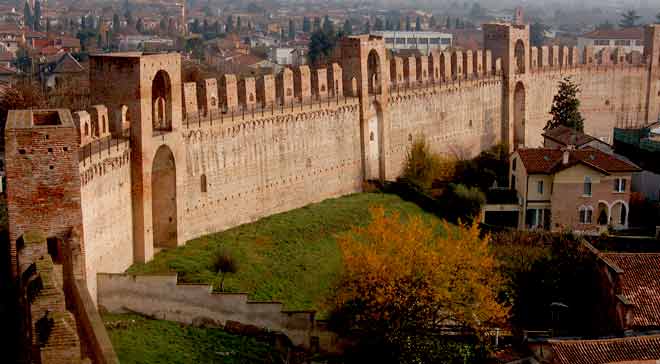
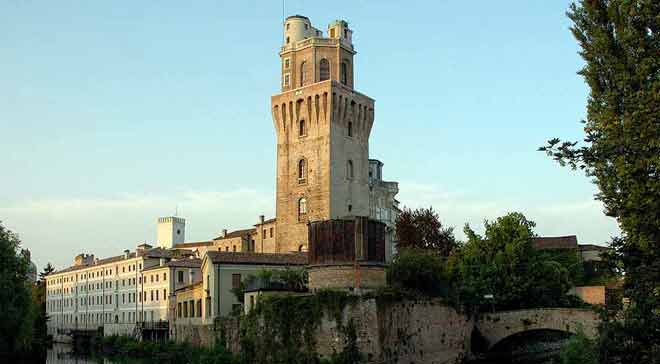
Almost 26 metres high, it was built in stone and brick in the 13th century and was conceived as a solemn entrance to the stra' regia or stra' maggiore (now Via Dante), the most important street in Padua. The tower rises on the outside above a sort of Romanesque triumphal arch in stone (decorated also with a pair of small lions), while inside two arches follow one another (the wider and more striking one is pointed) which allowed the defensive machines to be operated, among them the great gate-leaves hinged in the stone housings still visible today. Of interest is the Baroque access to the upper tower, a 17th-century construction set against the inner façade, on the left. To the sides unfold sections of the communal walls, which to the west continue along Via del Casin Rosso. The pedestrian access is the result of nineteenth-century works.
At the end of the nineteenth century the upper part of the gate was used as a storage tank for the city's first drinking-water distribution network.
The rumour that Galileo Galilei, during his Paduan period, used the gate as an astronomical observatory is probably false (although credited by a plaque by Carlo Leoni).