

Montegrotto Terme
Montegrotto Terme is known across much of Europe for its thermal treatments.
For thousands of years, thermal waters have risen from the depths in this area, bringing Montegrotto and, more generally, the Euganean Spa region to economic and cultural prosperity.
The town is home to the important glass art museum, to the Butterfly Arc - House of Butterflies and to significant Roman excavations.
The name Montegrotto is traditionally thought to derive from the Latin “Mons Aegrotorum”, which translated into everyday language means “mountain of the sick”. Indeed, one should bear in mind that in the centre of Montegrotto there is a hill where the sick would go to be treated, benefiting from the therapeutic effects of the mud and thermal water.
In medieval times the town took the name of “San Pietro Montagnone”.
This name most likely derives from the family that ruled at the time, the House of Montagnone.
San Pietro Montagnone was a hamlet of the municipality of Battaglia, from which it was separated and established as an independent municipality in 1921.
In 1934 it changed its name to Montegrotto Terme.
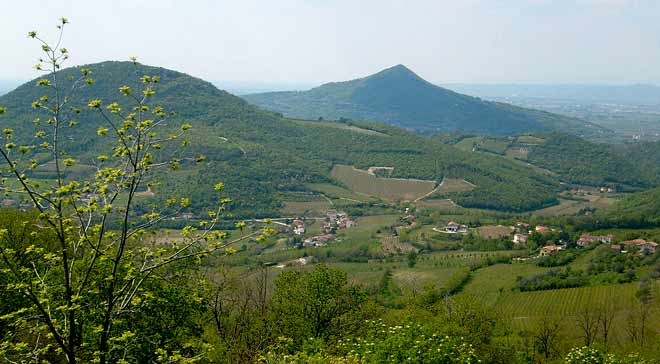
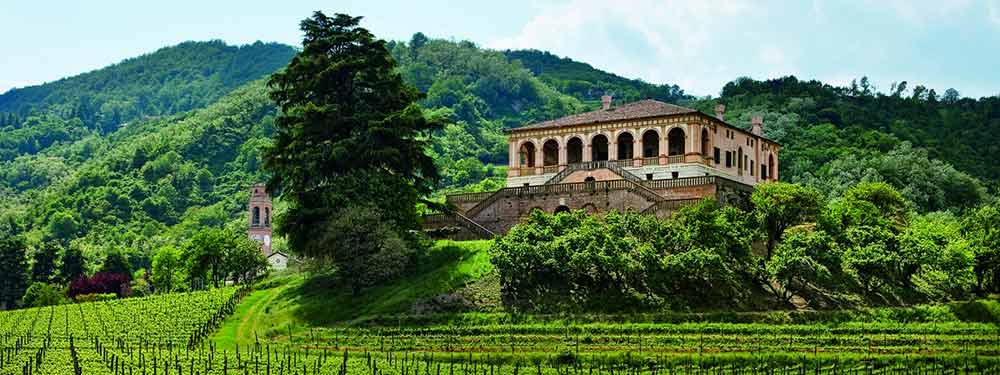
Montegrotto Terme is located at the eastern edge of the Po Valley, at the foot of the Euganean Hills and about 30 km from Venice. The municipal territory extends over 15.25 km², entirely flat and crossed by several canals and watercourses.
It has a climate similar to all the other areas of the Veneto Region. The town has a continental climate characterised by harsh winters and very hot, sultry summers, with a high percentage of humidity that encourages the formation of thick fog during the winter and autumn seasons and also brings strong muggy heat during the summer. Rainfall is evenly distributed throughout the year. During summer the rainfall is often of a stormy nature and accompanied by violent hailstorms. Spring and autumn are characterised by weather systems of Atlantic origin.