

Porta Ognissanti
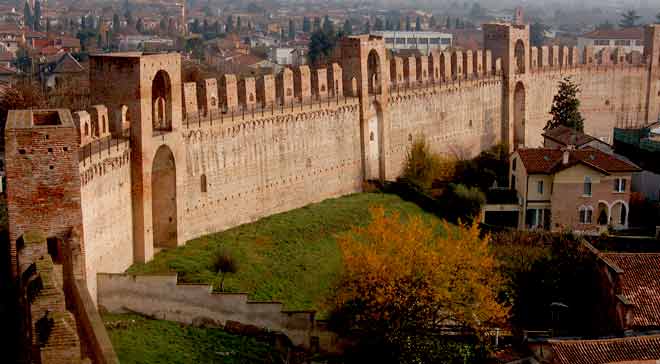
The Porta Ognissanti (Omnium Sanctorum in Latin, also called Portello Nuovo or Venezia) is one of the gates still existing within the sixteenth-century walls of Padua, famously built by the Serene Republic.
As one easily gathers from one of the monument's names, it rises in the area called Portello (that is "little port", because this area hosted a sort of landing - recently restored - for the boats that connected Padua with Venice along the Riviera del Brenta; but the more recent hypothesis is probably more likely, deriving it from the fact that, before the present gate, there was a "Portello" (a simple, or almost, pedestrian gate).
The gate in question dates, to be precise, to 1519, the year in which it took the place of the Portello Vecchio gate, which can be located in today's Via San Massimo.
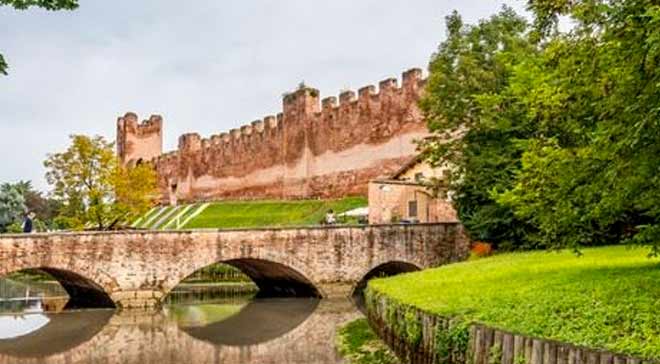
It presents rather different characteristics compared to the other gates of Padua of the same period. On the façade facing the exterior of the city, it is adorned with pure Istrian stone, with four pairs of columns in turn surmounted by an architrave embellished with four cannonballs in trachyte. Beside the base of the three-arched bridge in front of it over the Piovego canal, two lions in white stone stand perpetually on guard.
On the whole it is a building that very skilfully conceals its nature as a tactical stronghold.
Even today certain plaques can be read which commemorate the ancient origins of the city, praising at the same time its good government.
As a complement to such splendour, since 1535 a clock stands out from a sort of "little tower" (vaguely similar to that of the Quirinal), made of Nanto stone, forming the summit of the entire construction.
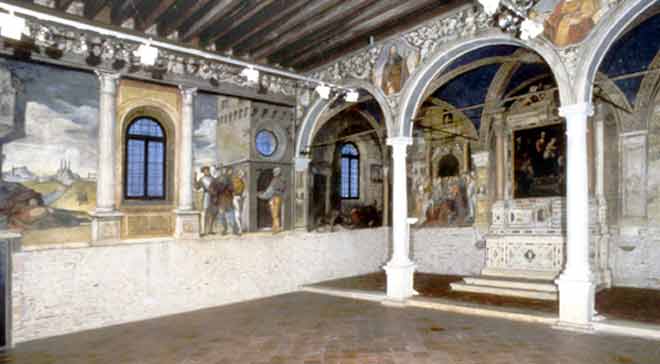
In the inner part of the gate, traces of frescoes can be discerned.