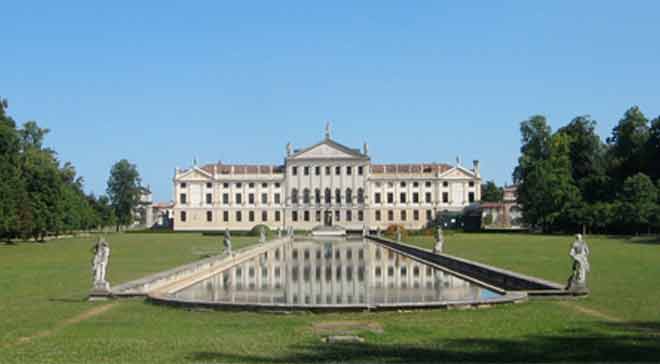


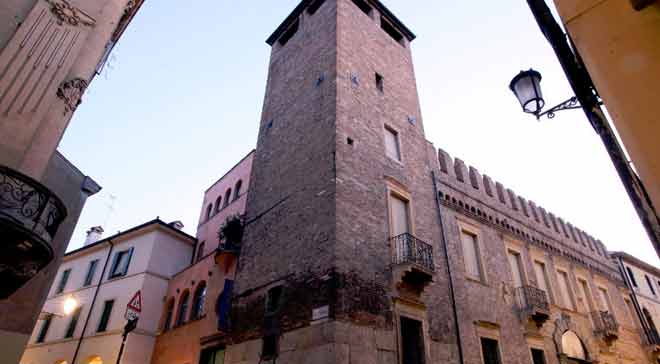
Palazzo Zabarella
The history of Palazzo Zabarella runs parallel to that of the city of Padua, from the 8th century BC to the present day.
Centuries of history blend harmoniously into the fabric of an architectural structure that, still today, is a perfect synthesis of past and present.
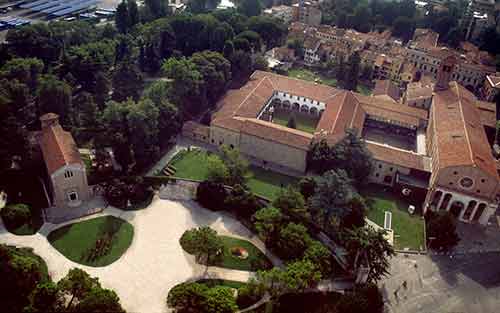
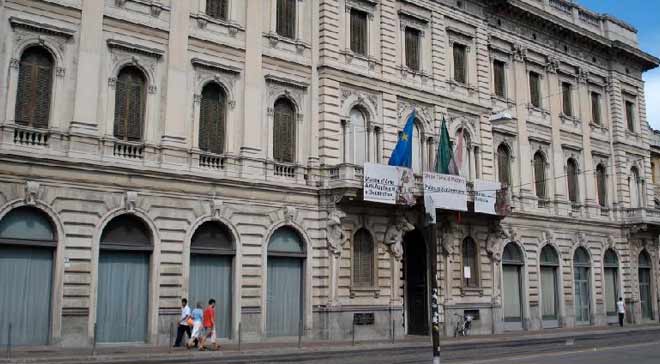
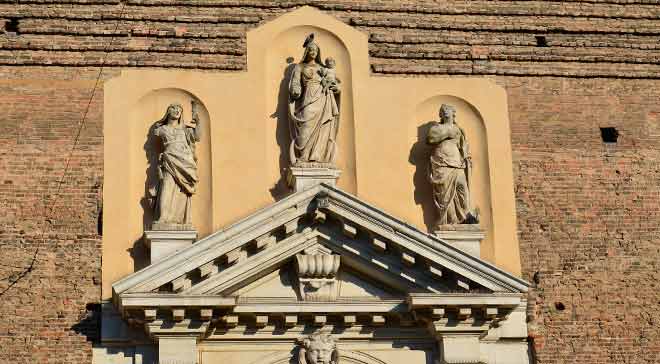
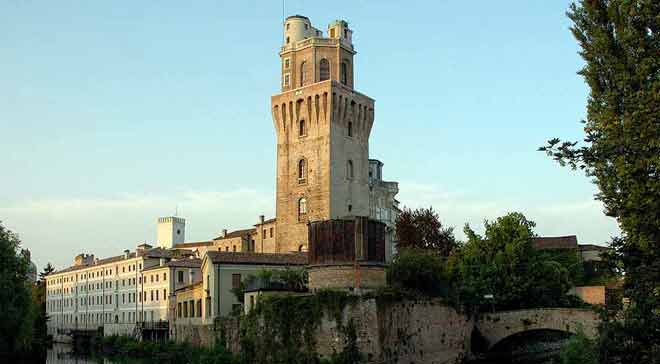
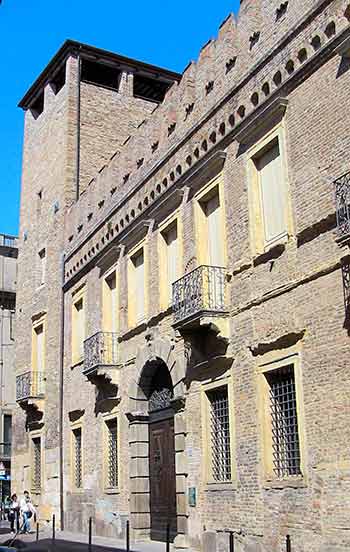 A continuity of settlement already attested by the use of Roman bricks employed in the construction of the present entrance façade, but also in the medieval layout of the building, evidenced instead by the tower and by the articulation of the inner open space.
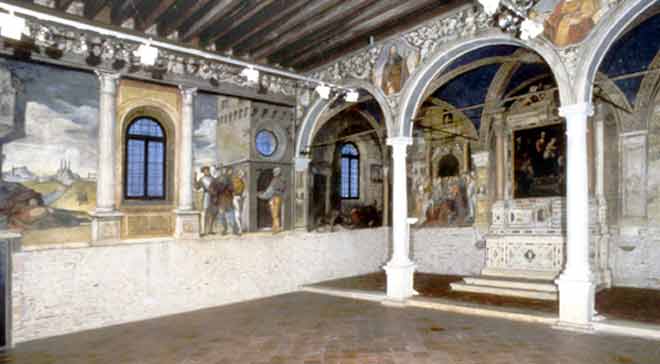
Over the centuries the palace was transformed, adapting to the styles of the time yet never abandoning its bond with the past. Still today the legacy of the medieval tower-house can be perceived, while the façade was transformed in the Renaissance and the arrangement of the interior spaces and the decorative scheme in the twentieth century.
The palace’s twentieth-century use as a bank and then as a private club leads into its more recent history, when in 1996 the Palazzo Zabarella complex, after almost ten years of archaeological excavation and restoration, came back to life, once again taking on the functions that had distinguished it in medieval times, namely the palace as a place of representation and the adjacent buildings as the seat of commercial activities.
It was precisely in this period, and specifically in 1986, that ownership passed to Federico Bano, who in the following years transformed the Palace into the seat of the foundation of the same name and into an exhibition space destined from then on to host exhibitions of international scope and cultural events. The restoration of Palazzo Zabarella in the early 1990s also offered the opportunity for a moment of study and analysis.
The archaeological excavation, ordered by the Archaeological Superintendency for the Veneto, which involved the inner courtyard over an area of about 300 square metres to a depth of about 3.50 metres, provided the occasion for an archaeological investigation into the origins and development of the entire complex over its first 1,500 years of life.
This is indeed the chronological span embraced by the evidence found in the subsoil.
Find out more on the website of Palazzo Zabarella >>>