

Cittadella
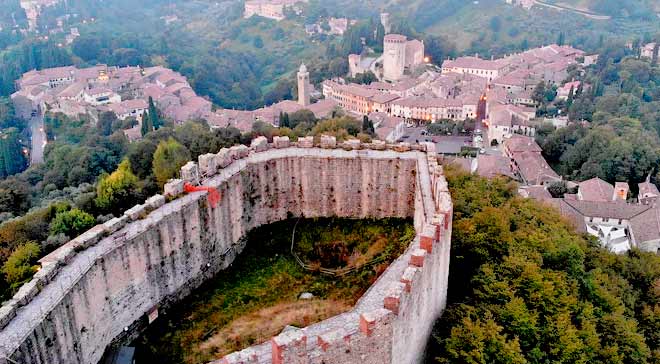
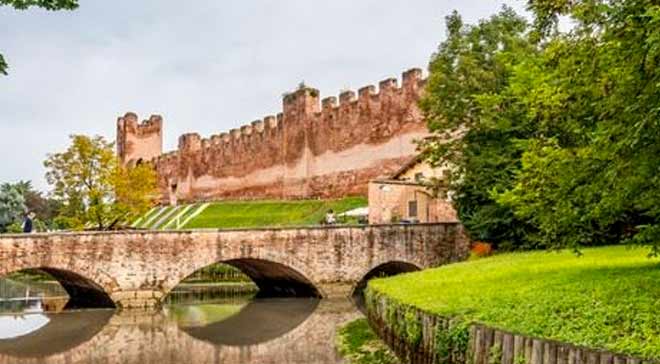
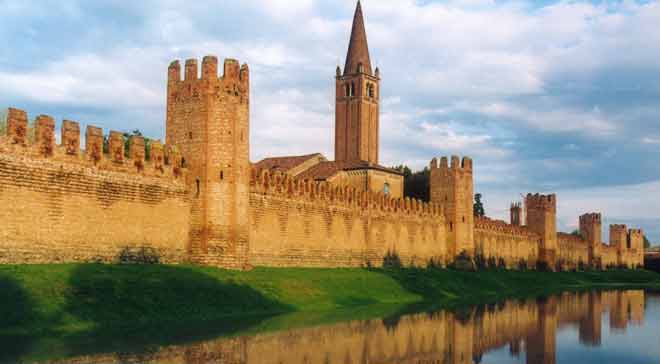
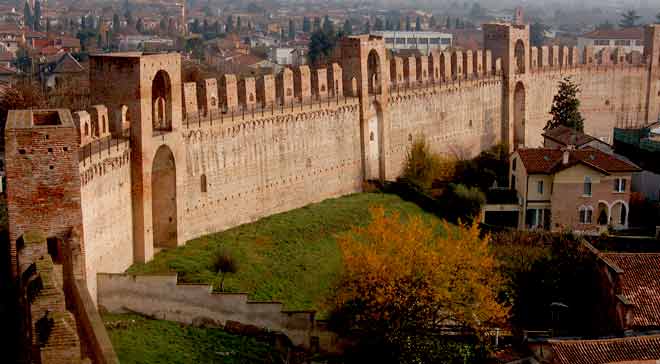
The walls of Cittadella are one of the rare examples in Europe of a defensive system with a walkway-rampart that can still be walked, perfectly preserved over time and still intact.
The walls rise to an average height of 14 metres, but at the towers standing guard over the gates they reach as much as 30 metres. Elliptical in shape, they extend for a circumference of 1461 metres and have an average thickness of about 2.10 metres. The wall alternates with 36 towers of various sizes: the 4 great towers at the access gates, 12 quadrangular towers measuring 6×4 metres in plan and about 22 metres high, and 16 smaller turrets with a more modest base of 6×3 metres and a height of 15. The distance between each of these elements is about 40 metres, and each of these stretches of wall is crowned by a parapet with 10 “Guelph” merlons with two smoothed slopes. In some places, owing to later renovations, there are also Ghibelline, or swallow-tailed, merlons.
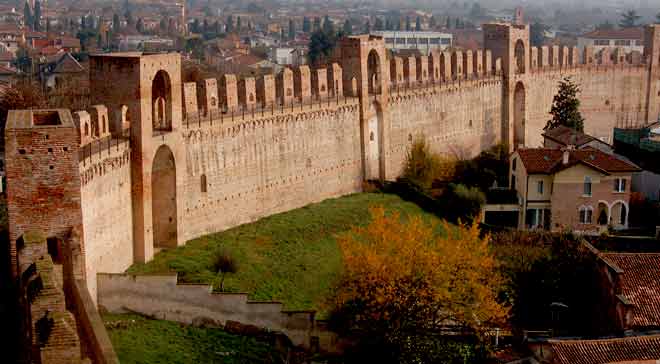 The walls are almost entirely without foundations and are held up by earthworks resting against them on the inside and outside, made with material excavated from the ditches. Around them runs a wide moat fed by spring water, which once reached such a level that it allowed abundant fish to live there, with a width and depth twice the present ones: it served as a defence when, in the medieval fortress, drawbridges took the place of the present masonry bridges.
The construction of the walls required the labour of many people over several years; at first work was limited to setting up defensive structures of earth and wood, building the access gates and the moat. Through a series of later interventions the masonry works were created. To the first phase corresponded the setting out of the four gates and of almost all the towers and turrets, on which rested rather low curtain walls; in the second the wall was raised and completed with the little arches and the merlons.
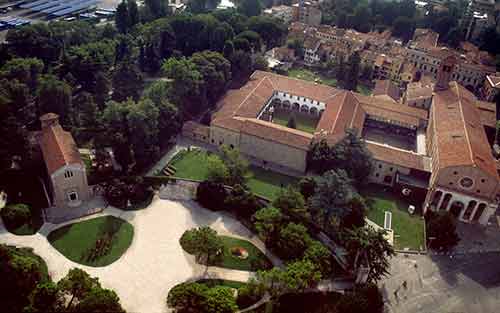
The recent restoration has made it possible to secure the ancient walkway-rampart, which allows visitors to admire the city from new and privileged vantage points. From above one can see that the space within the walls, anciently called “terra”, is organised on a chessboard-like geometric system, with the typical little streets of Roman ancestry, hinged on the two main axes that link the four gates. These are oriented according to the cardinal points, facing south towards Padua, west towards Vicenza, north towards Bassano and east towards Treviso. In the north-west quadrant, owing to the presence of a breach in the walls, a footbridge has been built that allows the walk along the walls to continue.
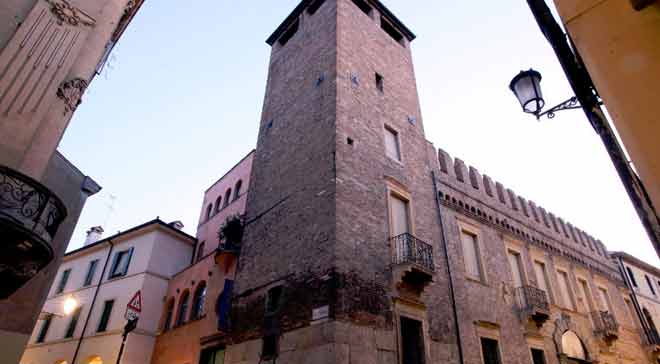
The Torre di Malta

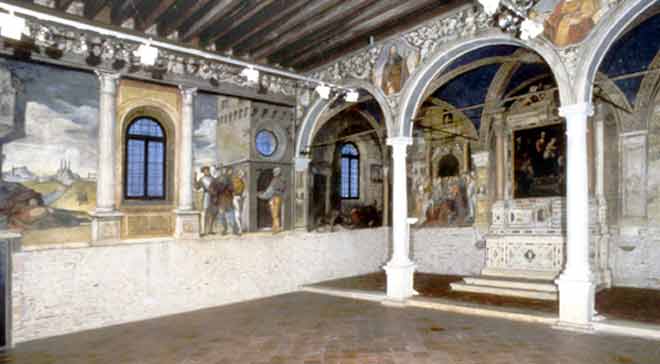
The museum holds a fair collection of archaeological finds ranging from the Bronze Age to the Renaissance, discovered in the territory of Cittadella.