

Oratorio di San Rocco
The Scuola di San Rocco, or Oratorio di San Rocco, is a building of medieval origin used until 1810 for religious purposes.
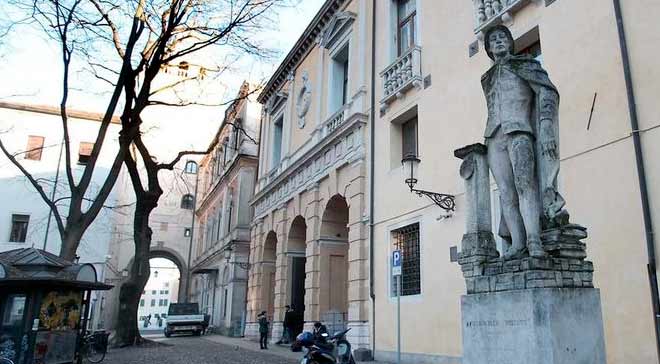
Located in one of the oldest areas of the city of Padua, the Oratory stands on the burial ground in front of the church of S. Lucia, which had been donated to the confraternity of SS. Rocco and Lucia.
In 1476 the Confraternity of S. Rocco acquired a building for the meetings of the chapter.
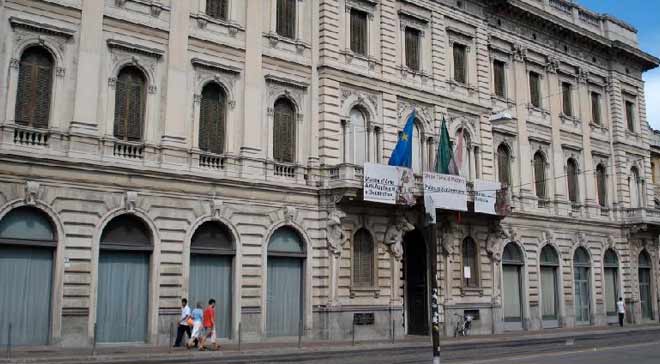
In 1525 the construction of the present building began; the works ended in 1542, the year in which the bishop blessed the Oratory.
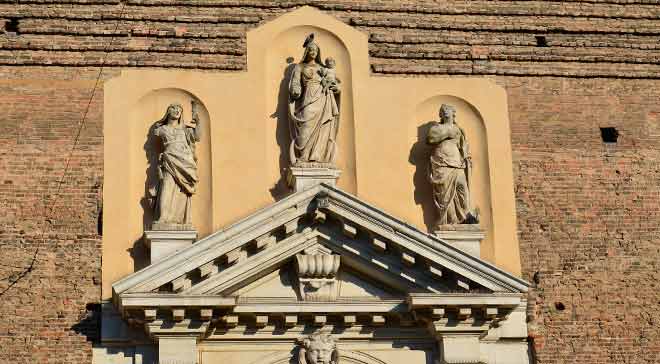
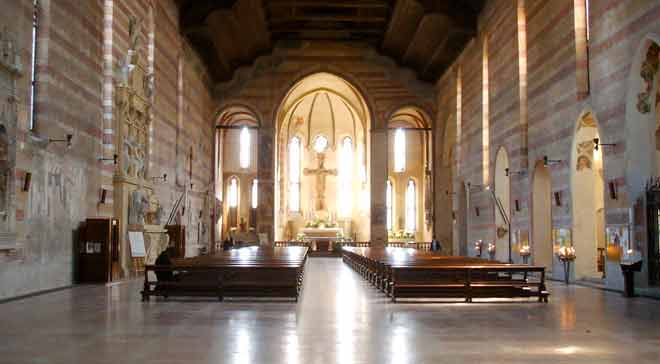
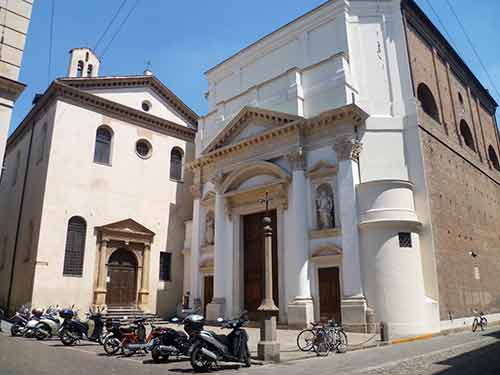 The building consists of two superimposed halls, with an irregular rectangular plan, and is open on two sides.
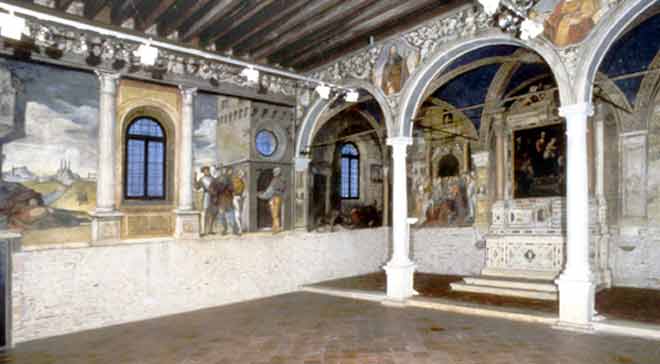
The lower hall represents the ancient chapel, with the altar placed on the wall facing the entrance.
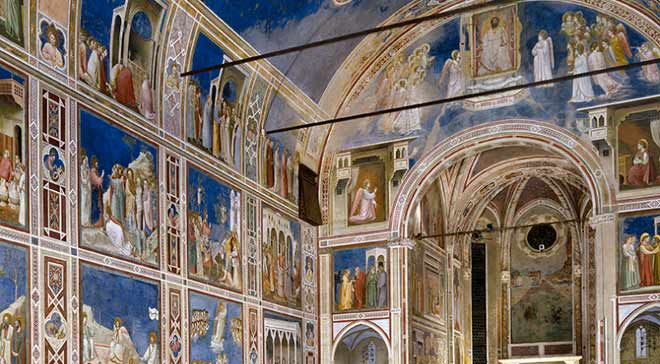
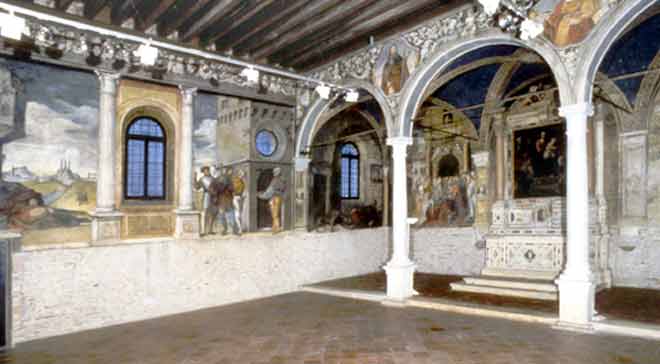
The walls of the lower hall are entirely frescoed: the scenes, which illustrate some episodes from the life of San Rocco, seem to unfold beyond a colonnade, and the openings of the hall (windows and oculi) are incorporated into the pictorial composition.
The cycle, which alternates landscape scenes, domestic interiors and architectural settings, surmounted by friezes with grotesque decorations, was created between 1536 and 1545 by Domenico Campagnola (Venice 1500 – Padua 1564), Girolamo Tessari known as dal Santo (Padua c. 1480 – after 1561), Gualtiero Padovano, Stefano Dall'Arzere (documented in Padua from 1540 to 1564).
In 1697 the altarpiece with the Madonna and Saints by Alessandro Maganza was placed on the altar of the lower-floor hall.
Following lengthy negotiations with the State, the Oratory passed to the Comune di Padova, which contributed to the expenses required for the restorations carried out between 1926 and 1929.
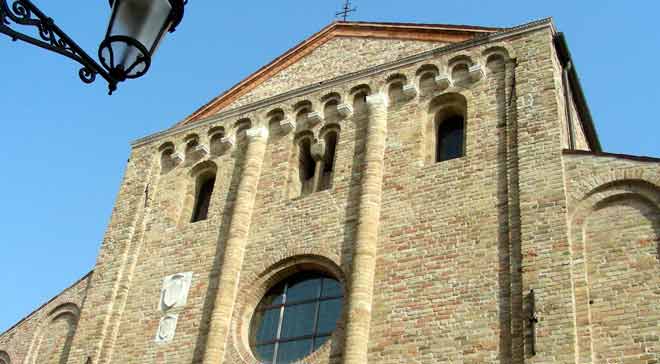
The plaster of the façade was redone; inside it was necessary to proceed with the reconstruction in concrete of the ceiling of the vaults, on which the painter Cherubini reproduced the original decoration.
Interventions to support the beams were carried out on the ceiling of the lower hall.
 A subsequent restoration campaign, to address the most urgent needs, took place in 1950.
On this occasion, about twenty square metres of fresco to the right of the altar were detached, cleaned and repositioned.
The campaign begun in 1984 was based on a series of preliminary investigations, aimed at documenting through scientific analyses the state of conservation of the frescoes, as well as the materials and techniques used.